
Source | Lanxess
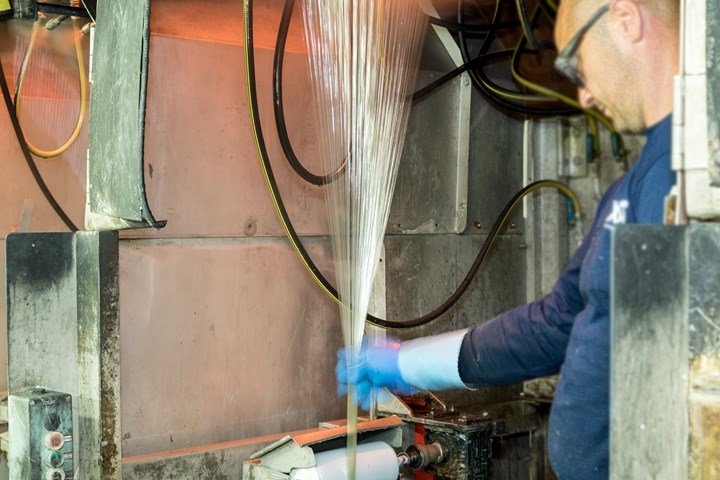
Durethan ECOBKV30H2.0, ECOBKV35H2.0 and ECOBKV60XF are the most recent examples of products made in line with this strategy. Lanxess says the recycled fibers manufactured from waste glass make up 30%, 35% and 60% by weight respectively of these three new PA6 compounds. Ecocycle (Boulder, Colo., U.S.), an independent inspection company, has examined the amount of recycled material in each compound and the long-term use of the glass waste stream using the mass balance method and awarded an ecoloop certificate in accordance with ISO 14021:2016. Lanxess notes the glass comes from waste from glass fiber production, or post-industrial recycling, and that, while it is not currently using waste glass fibers from end-of-life components, it does view them as a sustainable raw material for use in manufacturing new glass fibers.
The company’s High Performance Materials (HPM) business unit’s primary target for the three compounds is the automotive industry. Dr. Guenter Margraf, global product manager at the HPM unit notes that Durethan ECOBKV60XF offers exceptional strength and rigidity, making it suitable for manufacturing structural components such as front ends, pedal bearing brackets and A-, B- and C-pillars, as well as lightweight battery trays for electric vehicles.
Further, the HPM unity plans to gradually increase the number of ECO product types certified in accordance with the mass balance method, including the launch of a new PA6 product with a 30% glass fiber content and reduced carbon footprint. The caprolactam required to produce this more environmentally friendly PA6 is based on a selection of petrochemical raw materials that support this concern.