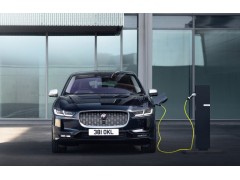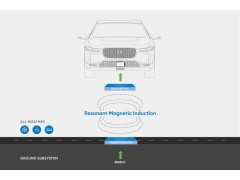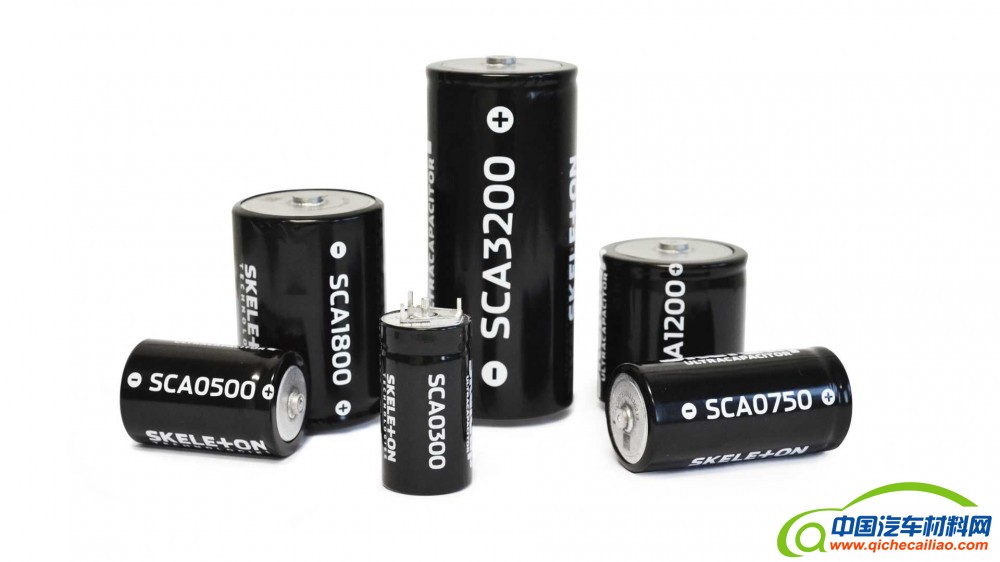
The SuperBattery will utilize Skeleton’s patented Curved Graphene carbon material to achieve a charging time of just 15 seconds (240C) and charging cycles counted in hundreds of thousands.
As in the case of other ultracapacitors, also this one is not energy-dense enough to replace the lithium-ion batteries, although it beats lead-acid and NiMH, reaching some 60 Wh/kg.
"The key differentiator for the SuperBattery is Skeleton’s patented Curved Graphene carbon material, enabling the high power and long lifetime of ultracapacitors to be applied in a graphene battery. Ultracapacitors are increasingly emerging as the ideal complementary technology to lithium-ion batteries, as also shown by Tesla’s acquisition of ultracapacitor manufacturer Maxwell Technologies in the hopes of improving batteries used in Tesla’s electric vehicles."
Despite the energy density beings several times lower than in the case of typical EV batteries, the new SuperBattery might be a perfect fit for all types of hybrids (conventional hybrids, plug-in hybrids or hydrogen fuel cell vehicles). It might also be a supplement for the main traction battery in all-electric vehicles to carry on the high power under acceleration or strong recharge. In theory, it could extend battery life and lower the cooling needs of the battery pack.
Who knows, maybe we will see the SuperBattery also for the replacement of lead-acid auxiliary batteries in higher-end EV models.
The Karlsruhe Institute for Technology is a well-known actor in the development of energy storage technologies. Within the cooperation, the synergies between Skeleton and KIT will be used to bring next-generation energy storage technologies such as the SuperBattery to market readiness.
The SuperBattery has already garnered a lot of attention in the automotive and transportation sectors. Recently, Skeleton Technologies signed a €1-billion Letter of Intent with a leading automotive OEM to bring the technology to the market.