Nowadays, the transportation industry is responsible for nearly one-third of global energy demand, and it is the major source of pollution and greenhouse gas emissions in urban areas. Graphene Flagship scientists are therefore continually trying to develop new materials to lower fuel usage and CO2 emissions, helping to mitigate environmental damage and climate change.
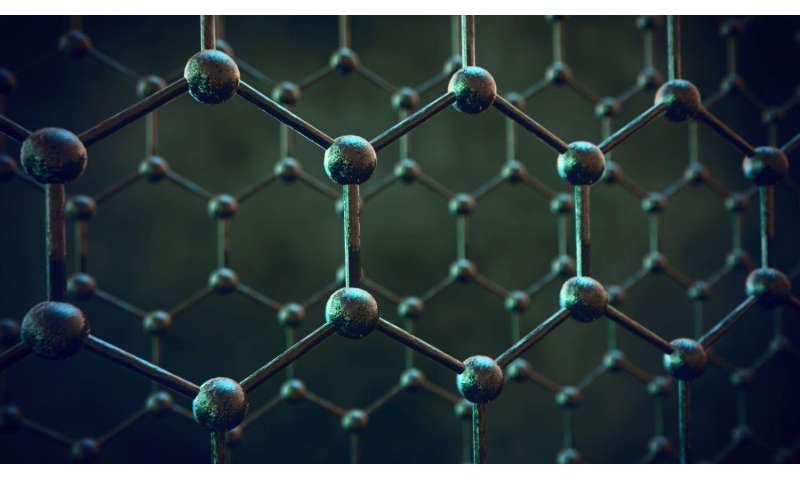
Graphene-integrated composites are an example of lighter materials with great potential for use in vehicle frameworks. They are constructed by introducing graphene sheets, a few billionths of a metre thick, into hierarchical fibre composites as a nano-additives. Hierarchical fibre composites are a type of composite material in which components of different sizes are combined in a controlled way to significantly improve mechanical properties. They typically consist of micro- or mesoscopic carbon fibres, a few millionths of a metre thick, attached to a polymer matrix, and they are already used as building materials to make vehicles of all shapes and sizes.
Graphene's high aspect ratio, high flexibility and mechanical strength enable it to enhance the strength of weak points in these composites, such as at the interface between two different components. Its tunable surface chemistry also means that interactions with the carbon fibre and polymer matrix can be adjusted as needed. The fibre, polymer matrix and graphene layers all work together to distribute mechanical stress, resulting in a material with improved strength and other beneficial properties.
There are many challenges to consider. For instance, planes experience temperature changes between 20 °C and -40 °C every time they take off and land, with huge differences in pressure and humidity. Graphene-integrated composites therefore need to withstand water condensing and even freezing inside the fuselage. They also need to endure lightning strikes, which happen several times per month, so the conductive properties of graphene must be harnessed to create an electrically conductive framework that resists electromagnetic impulses. In cars, new structural materials must be able to withstand crash tests and be lightweight enough to ensure fuel efficiency. Graphene Flagship researchers are also investigating conductive materials to replace circuitry in car dashboards.
Researchers and end-users come together
Graphene Flagship partners at Queen Mary University and the National Graphene Institute, UK, FORTH-Hellas, Greece, CNR, Italy, and Chalmers University of Technology, Sweden, collaborated with researchers at the University of Turin, the University of Trento and KET-LAB, Italy, and the University of Patras, Greece, to provide perspectives from the research community. They worked with scientists at Graphene Flagship partner companies Nanesa, Italy, and Avanzare, Spain, to review the technological viability of graphene-incorporated FRCs.