The area of interest is a new gel-polymer electrolyte system that has the potential to suppress dendrite growth in cells with a lithium metal anode, and ultimately shorten the time to market for an all-solid lithium metal battery.
Professor John Goodenough is a 2019 Nobel laureate in chemistry and one of the top brains in lithium-ion batteries.
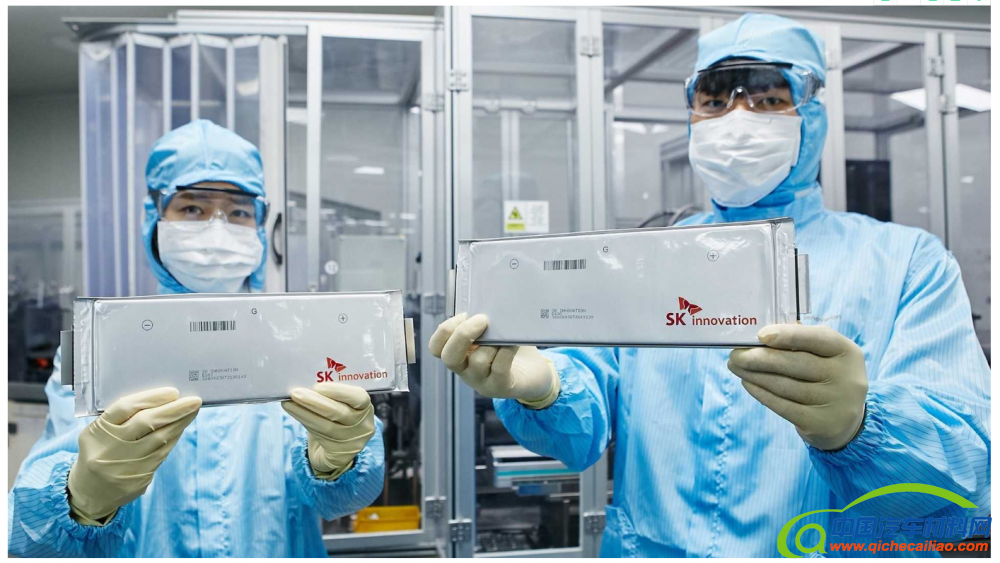
"Goodenough and Dr. Hadi Khani at The University of Texas at Austin aim to develop unique gel-polymer electrolyte for a lithium metal battery with the goal of providing higher energy density and better safety at a competitive cost."
According to SK Innovation, the current lithium-ion technology "is not likely to overcome 800 Wh/L energy density", and to go higher - like 1,000 Wh/L, a lithium metal anode combined with solid-state electrolyte is "viewed as a promising solution".
"Despite these merits, there are technology hurdles to overcome to realize an all-solid lithium-metal battery. A critical hurdle is dendrite growth, tiny needle-like projections that can create issues with the battery. These growths on the surface of the lithium metal can lead to energy loss and malfunctions, causing catastrophic failure of the battery and even safety hazards.
To overcome this hurdle and deliver a next-generation battery to market, SK innovation along with Goodenough and Khani plan to develop a new gel-polymer electrolyte system which will evenly transport lithium-ion while filtering undesired ions from traveling and ultimately suppress dendrite growth. The goal is to develop a microporous polymer matrix with weakly- coordinating-anion system that can be applied to larger, more powerful cells."
It might take years before the right solution will be found and implemented in a commercial product, but we are quite optimistic about the progress.
Today, so many laboratories are working daily on a new chemistry, or a better material, that it's just a matter of time when the battery tech will be improved significantly.