识别二维码下载法案全文

最终法规将在2026年之前将CAFE和CO2排放标准的严格度每年提高1.5%,而2012年发布的CO2标准则需要每年增加5%。
法规总体影响
新法规将在成本降低、安全性方面做出更多贡献,并且对油耗和环境的影响最小。
- 到2029年MY年,车辆使用期内的总成本减少2000亿美元,包括提高安全性的价值。
- 减少1000亿美元的监管成本。
- 每辆新车的总拥有成本减少1,400美元。
- 每辆新车的销售价格降低$ 1,000以上。
- 售出了270万辆新车(因为新车更便宜)。
安 全
- 事故死亡人数减少3,300。
- 预计在MY 2029年之前制造的车辆在使用寿命中,发生严重事故后的住院人数将减少46,000。
- 受伤少397,000。
- 撞车损坏的车辆减少180万辆。
环 境
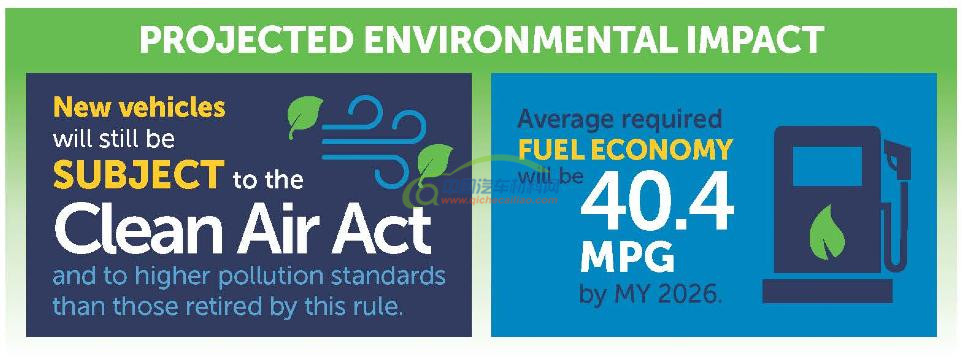
- 所有新车将继续遵守《清洁空气法》的严格污染标准,并且新车将比因该规则而淘汰的旧车受到更高的污染标准要求。
到2026年MY时,预计行业整体平均所需燃油经济性为40.4 mpg,而根据2012年标准,该数值预计为46.7 mpg。
EPA管理员安德鲁·惠勒(Andrew Wheeler)说:“与2012年的标准相比,它们更加现实和可实现。”
附:英文原文
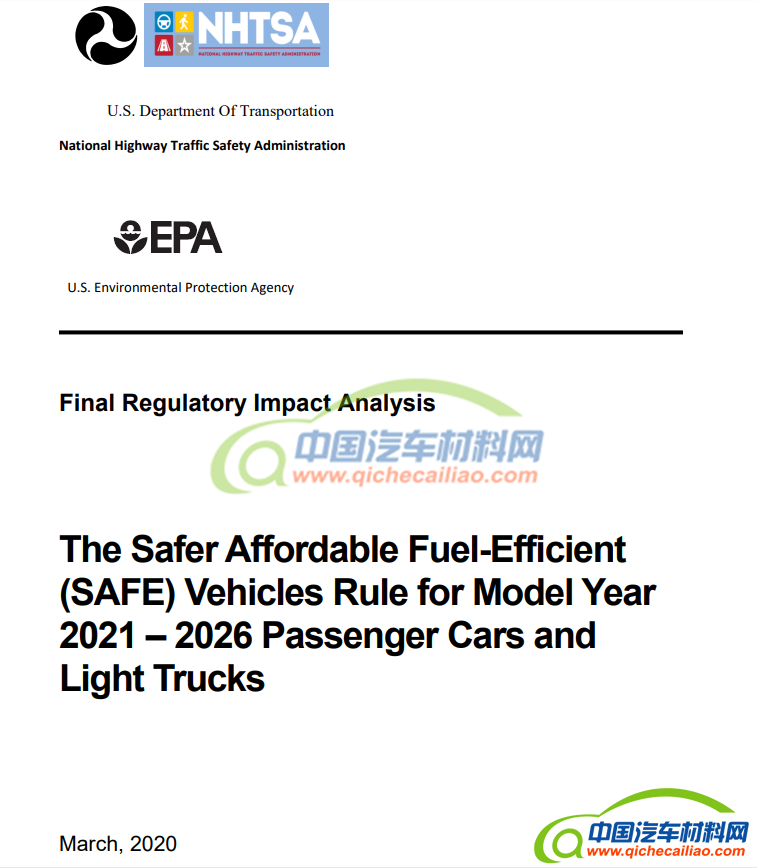
The U.S. Department of Transportation’s National Highway Traffic Safety Administration (NHTSA) and the U.S. Environmental Protection Agency (EPA) today released the final Safer Affordable Fuel-Efficient (SAFE) Vehicles Rule setting corporate average fuel economy (CAFE) and CO2 emissions standards for model years 2021-2026 passenger cars and light trucks.
“This rule reflects the Department’s #1 priority—safety—by making newer, safer, cleaner vehicles more accessible for Americans who are, on average, driving 12-year-old cars. By making newer, safer, and cleaner vehicles more accessible for American families, more lives will be saved and more jobs will be created,” said U.S. Secretary of Transportation Elaine L. Chao. “Today, President Trump is keeping his promise to autoworkers made three years ago that he would reinvigorate American auto manufacturing by updating costly, increasingly unachievable fuel economy and vehicle CO2 emissions standards, and that is what the Safer Affordable Fuel-Efficient Vehicles Rule accomplishes.”
“We are delivering on President Trump’s promise to correct the current fuel economy and greenhouse gas emissions standards,” said EPA Administrator Andrew Wheeler. “Our final rule puts in place a sensible one national program that strikes the right regulatory balance that protects our environment, and sets reasonable targets for the auto industry. This rule supports our economy, and the safety of American families.”
The final rule will increase stringency of CAFE and CO2 emissions standards by 1.5% each year through model year 2026, as compared with the standards issued in 2012, which would have required about 5% annual increases. This is a change from the proposal issued in 2018. The majority of automakers are not meeting the 2012 standard without resorting to the use of credits. The final rule can be found at: NHTSA.gov/SAFE.
NHTSA is required by Federal law to set fuel economy standards at the maximum feasible level for both passenger cars and light trucks, for every model year. If NHTSA determines that standards previously set are no longer maximum feasible, NHTSA can amend them. In determining what levels of CAFE standards would be maximum feasible, the law directs NHTSA to consider four specific factors: technological feasibility; economic practicability; the effect of other motor vehicle standards of the Government on fuel economy; and the Nation’s need to conserve energy.
On April 2, 2018, the EPA issued the Mid-Term evaluation Final Determination that found that the MY 2022-2025 CO2 emissions standards are not appropriate and should be revised. For nearly two years, the agencies worked together to extensively analyze current automotive and fuel technologies, reviewed economic conditions and projections, and consulted with other Federal agency partners to ensure the most reliable and accurate analysis possible. The agencies also evaluated more than 750,000 public comments and held three public meetings.
The SAFE Vehicles Rule reflects the realities of today’s markets, including substantially lower oil prices than in the original 2012 projection, significant increases in U.S. oil production, and growing consumer demand for larger vehicles.
The SAFE Vehicles Rule increases U.S. competitiveness by reducing regulatory costs by as much as $100 billion through model year 2029. According to NHTSA/EPA projections, it will also boost new vehicle sales through model year 2029 by up to 2.7 million vehicles. At a time of sudden economic uncertainty, the SAFE Vehicles Rule provides help for millions of American workers and thousands of businesses in the auto sector and related industries by cutting costs and increasing sales of safe new vehicles.
By reducing the average price of a new vehicle by about $1,000, this right-sized rule will make it easier for Americans to afford to buy newer, cleaner, and safer vehicles.
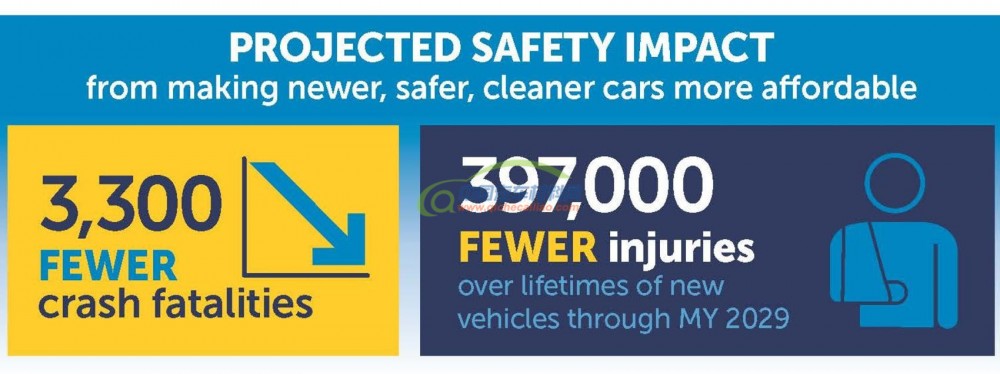
The SAFE Vehicles Rule will also help more Americans afford newer vehicles, which NHTSA’s research shows are safer than ever. about 3,300 fewer crash fatalities, 397,000 fewer injuries, and more than 1.8 million fewer vehicles damaged in crashes are projected over the lifetimes of vehicles built according to these new standards.
At the same time, the SAFE Vehicles Rule continues to protect the environment by increasing stringency of CAFE and CO2 emissions standards over the next five years, ensuring that Americans will have a wide range of affordable, safe, and fuel-efficient vehicles to choose from. Under the SAFE Rule, the projected overall industry average required fuel economy in MYs 2021-2026 is 40.4 miles per gallon, compared to the 46.7 mpg projected requirement in MY 2025 under the 2012 standards, and the new rule reduces the number of credits that are not associated with improved fuel economy. This rule is the largest deregulatory initiative of this administration. The agencies project that under these final standards, required technology costs would be reduced by $86 to $126 billion over the lifetimes of vehicles through MY 2029. At the same time, the SAFE Vehicles Rule provides regulatory certainty by establishing one set of national fuel economy and CO2 emissions standards for passenger cars and light trucks.
Under the rule, new vehicles will continue to be required to meet the Clean Air Act’s strict pollution standards, ensuring that air quality will be protected from smog-forming emissions. The rule will also see CO2 reductions year over year.