Advanced Engineering Report
A vehicle platform that combines lightweighting, electrification and aerodynamics
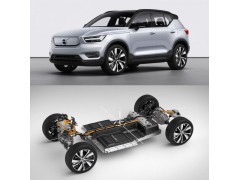
The Lightweight Electric Vehicle Platform demonstrates Williams Advanced Engineering's capabilities in light weighting, electrification and aerodynamics integrated into an innovative platform design. It also displays a number of technologies that have been assembled into one platform to deliver a compact and efficient structure.

The platform has been engineered to be modular for energy storage with a module concept flexible to incorporate multiple cell formats. Designed to form the basis of high performance electric vehicles, the platform can have a range of potential wheelbases, storage and power availability.

The platform gives standard rear wheel drive with optional 4WD. It has been designed around the incorporation of industry available powertrain components. The rear wheel drive system uses an Xtrac P1227 ILEV gearbox and two YASA P400C motor using a SEVCON invertor package to optimize the aerodynamic form. The front wheel drive system uses a single P400C YASA motor integrated into a compact Xtrac limited slip differential.
The platform integrates Racetrak and 223 approaches, into a single, highly integrated solution that addresses the challenges of effective, affordable electric vehicles.
Battery case cover 223

223 is the process of creating an engineered hinge embedded in a simple composite preform.
This enables the formatting of 3D structures from 2D materials opening up the potential for production methods that have previously been cost and production rate prohibitive.
Racetrak

Scaled's large 3D printed vehicle concept

Scaled develop large scale 3D printing technology and expertise to enable designers, engineers and manufacturers to:
- Think big in terms of scale and scope, with complete geometric freedom
- Accelerate innovation and development time with faster iterative optimisation
- Lower cost, streamlining process overhead and enabling sustainable manufacturing
With the ubiquity of carbon fibre derived materials to deliver light, stiff structures, tooling is becoming a bottleneck for both product development and manufacture. Scaled manufacturing techniques can transform tool manufacture to reduce costs and enable testing of both form and function of the final carbon component.
The ability to realise large-scale objects quickly and cost-effectively is helping automotive design customers avoid the traditional frustrations associated with long waits for panel and part prototypes and seating bucks. Simultaneously, increasing portfolio of printed materials that meet exacting performance requirements are enabling engineers to play with novel designs that leverage the advantages of AM. The company is now looking forward to printed production vehicle components in the very near future.

BAC Mono R made with composites parts from Pentaxia

Pentaxia worked with BAC as the main composite supplier for its supercar and showcased the Mono R on its stand.
The Pentaxia team worked closely with the BAC designers and were actively involved in decisions on how the car should be manufactured as the car was the first in the world to use graphene-enhanced carbon fibre in every panel. Through this collaboration, BAC was able to deliver a design that not only looks amazing but also contained an entirely new vehicle architecture with enhanced aerodynamics.
The Mono R is an exclusive supercar made with only 30 models being produced and already sold to existing Mono owners around the world. Pentaxia manufactured all 30 car sets and supplying parts fully finished and ready for assembly.
An all composite heavy duty two-piece wheel

Carbon Three Sixty presented a wheel made by RTM and is 40% lighter than forged aluminium equivalent without compromising performance, functionality or damage tolerance.
It is a direct replacement for a two part bolt together steel or alloy wheel used on many military vehicles.
Aesthetic carbon-fibre fabrics

Total Composite Solutions displayed panels with parts made with a large range of colored carbon fibre fabrics.