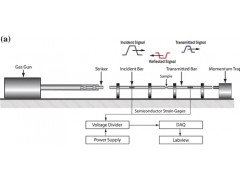
However, no guidelines were available as to the testing method, specimen dimensions, measurement devices, and other important issues which are critical to the quality of testing results. As a result, data from different laboratories are often not comparable. Quality of the testing data is, in general, not satisfactory. Signal damping and curve smoothing are often necessary to make the testing data usable.
With the increasing needs for tensile steel stress-strain data at dynamic conditions, WorldAutoSteel pursued the development of a Recommended Practice for Dynamic Tensile Testing for Sheet Steels. A team composed of testing experts from WorldAutoSteel steel company members was commissioned in March 2003 to pursue this developmental work and ultimately draft the recommended practice. Data on the sheet steel experiences of major testing laboratories were compiled, including ArcelorMittal, Colorado School of Mines, Ispat Inland Inc., JFE, Nippon Steel Corporation, POSCO, Sumitomo metals, Technical University of Aachen, ThyssenKrupp Stahl, University of Dayton Research Institute and University of California at San Diego.
After a draft recommended practice was developed, a Round Robin test program was launched in early 2004 and completed in early 2005. based on the results from the Round Robin test program, the recommended practice was modified and the specimen geometry was further refined.
The final Recommended Practice for Dynamic Tensile Testing for Sheet Steels included information on the scope of the project, some specifics about high strain rate testing, machine types and input methods, specimen geometry, clamping methods, measurement devices and an assessment and improvement of data quality. Click the attached report to review the Round Robin test program results and the Recommended Practice for Dynamic Tensile Testing for Sheet Steels.
The project team submitted the resulting Recommended Practice to the International Standardization Organization (ISO) for consideration as an ISO standard. This effort was successful and a two-part standard resulted:
ISO26203-1: Tensile testing at high strain rates: